Wednesday, October 2, 2013

GROUP WORK (FUTURISM MANIFESTO)

Introduction

What is a futurist?
A futurist is someone who studies the future in way to assist people in gaining understanding, anticipate and to prepare for coming changes. It is the uses of foresight to explain or describe what could happen in the future. This may include driving forces, assumption, evidence or indicators of the future. (Association professional futurist, 2013). This was how futurism came about through the minds of a futurist. Futurism, “is an artist movement originated in Italy around 1909.With aims to express the energetic, dynamic and violent quality of contemporary life, especially as embodies in the motion and force of modern machinery.” (Houghton Mufflin, 2009).

History of Futurism
Filippo Tommaso Marinetti

Futurism was an art and social movement which originated in Italy around the 20th century and was formed by Filippo Tommaso Marinetti, the father of the Futurist movement.  One could say that the Futurist movement glorified themes associated with the vision and concept of the future.  These themes include technology, speed, violence, youth, etc.
 This idea or rather this concept of Futurism was jogged by Marinetti’s near death experience, him involved in a car accident. The manifesto was written around 1909 and was published on the 20 February 1909 in the French daily newspaper, Le Figaro

­ Before moving forward we understand that the Industrial Revolution formed the foundation for the modern world were technology became rapid; we first see the steam engine being invented which lead up to the invention of the motorcar in 1885. This formed basis of their obsession in emphasising speed, violence, etc in their artwork.  The Futurist demonstrated their obsession with the concept of the future in their artwork through the use of brushstrokes, which showed continuous movement.  Futurism was one of the first movements that directly targeted the mass audience

The Ideology

The idea of development was a key driving force behind the movement of Futurism. The Futurist expressed ideas of speed, aggression, rebellion and the beauty of modern technology. Futurism captured the city life, modern machinery and it main idea was to appose the beliefs and traits of an Avant-guard era. 

Looking at the sources that we have gathered we believe that this ideology was prompted by inventions that occurred at that particular space and time. Even though it did take place during the early 19th century, the Industrial Revolution plays its role towards modern civilisation. It was the late 19th and early 20th century that saw Futurisms arrival. The three key inventions we identified were: the motorcar (1885), wireless telegraph (1895) and the airplane (1903). These inventions sparked the idea of speed, which was what the Futurists stood for. They collapsed the existence of space and time rendering it absolute.

The Futurists touched on 5 areas of experimentation:

·       Light and colour 
·       Movement and speed
·       Plastic dynamism of form
·       The interpenetration of form
·       Prismatic/ Shattering

Light and colour were rendered in an abstract manner. Plastic dynamism was expressed through the method of simultaneity and the state of capturing the subject in its mobile and immobile state brought about the quality of dynamism. A good example would be the artwork Dynamism of Dog on a Leash.  Areas such interpenetration and Shattering give the idea of closely analysing the subject hence explaining their in-depth expression of the beauty of the machine.

Giacomo Balla-Dynamism of Dog on a Leash

The telegraph was considered as the mode of communication at the time and it inspired Marinetti to instil a belief to the futurists.  To send a telegram one had keep in mind the fact that the telegraph used a “pay-per-word” method, so one would have to limit the amount of thing said when encoding a message. Marinetti encouraged poets to use this clipped like language. Poets were encouraged to skip the analogy process when expressing metaphors and artists were encouraged likewise with their artworks.  When the wireless telegraph came about Marinetti encouraged the idea of “wireless imagination”

The Victory of Samothrace
Filippo Marinetti had the opportunity to study the Victory of Samothrace as a student. This statue is a Greek marble statue depicting the goddess of victory, Nike. Marinetti compared the ancient statue (which dates back to 190 B.C.) to a speeding car. Unlike most classic sculptures this marble statue portrays a sense of being dynamic and it possesses a quality of movement. Through his analysis he believes the racing car to be more attractive and in stating this he favours the beliefs of the futurists over the beliefs of an arts and craft or Avant guard era. This also means that symbolism and aura that went with the statue has now manifested in the race car with in roaring motor.  

Filippo Tommaso Marinetti
Filippo Tommaso Marinetti was an Italian poet born on the 20 February 1876 in Egypt. He went under the name Emilio Angelo Carlo before changing it. Marinetti began his education in 1884 in France where he studied law at the University of Pavia. His wealthy father was the one who commanded him to pursue a career in law. At the age of seventeen he created his first magazine called ‘Le Papyrus’. In 1898 he published his first poem ‘The Cup-Bearer’ and the next year he got his degree.  His interests thou were in law so he relocated to Paris to purse a career in poetry.
On October 15, 1908 he was involved in an accident that inspired him to invent futurism, and arts-and-literature movement. The following year in on the 20th of February Marinetti published ‘The Founding and Manifesto of Futurism’ in a number of Italian newspapers and also the Paris newspaper, Le Figaro. He became a prominent typographer and implemented onomatopoeia in his works.
In 1911 Italian biplanes raided provinces of the Ottoman Empire and Marinetti explains that the lack concern shown by the Arabs towards the biplanes was reflected by society’s attitude toward Futurism.
Analysis of artwork
The Futurists wanted to break away from the Classical and Renaissance styles that dominated Italy at the start of the twentieth century. The movement was striving to portray speed and forceful dynamism. The goal for the work was to depict a synthetic continuity of motion.

For some, the sculpture shows a striding into the future. The sculpture has an aerodynamic and fluid form. As a pedestal, two blocks at the feet connect the figure to the ground. Its undulating surface seems to transform before the eyes of the viewer. One can say the Boccioni sculpted a future-man: masculine, dynamic and driven in his stride.

The face of the sculpture is abstracted into a cross, suggesting a helmet, which is appropriate reference for the ‘war-hungry’ Futurists. The figure doesn’t appear to have arms, though wing like forms appear from the back. These protrusions are not necessarily part of the figure itself since Boccioni sculpted the figure and its immediate environment. The air displaced by the figure’s movements is rendered in forms no different than those of the actual body. For example, the flame-like shapes that begins at the calves and shows the air swirling away from the body in motion.

Boccioni continued the theme of human movement seen in his paintings such as “Dynamism of a Soccer Player, 1913”. Movement was a key element for Boccioni and the other futurists, as the technology of transportation allowed people to experience even greater speeds. The blurry, fleeting, fragmentary sight created by this new velocity.
This is a very unique type of art. The bronze sculpture has three-dimensional traits, yet it upholds a different trait. It is able to capture and stop time and movement. It can be compared to Eadweard Muybridge’s “Female Semi-Nude in Motion”.

Boccioni is very successful in presenting two-dimensional effects. He cloaked the true figure in the clothing of atmospheric effects, thus the work is no longer just an object but also the forces that act upon the subject. Just as a picture captures a scene, Boccioni locks this one moment onto this “box”. The time is very finite. It has captured only one moment of a series of events.
Report on delegation of tasks and presentation
Digapeng was assigned to analysing the artwork and Ntsako was responsible for the Aesthetics of the movement. Khani was dealing with the history of the movement and overview of Futurism while Morena was responsible for the ideology of the movement. Ditiro was the key artist of the movement and the PowerPoint presentations
The research was shared amongst the group members and each had to gather findings on their particular task. For the actual presentation Khani did the introduction of the and talked about the history of Futurism. Morena followed with a discussion of the movements’ ideology.
Ditiro gave a background of the key artist and talked about the aims of the movement. Khani further explained the aesthetics of the movement and Digapeng gave the analysis of the chosen artwork. For the second part of the presentation Digapeng introduced the group manifesto and Ditiro explained what the movement is about.
Ntsako was not present on the day of the presentation.

Group Members
Mapiti Ditiro Shayi MGI 2010-1746
Morena Moletsane MGI 2011-1989
Digapeng Mothibe MGI 2011-0098
Khanimambo Mkhombo MGI 2010-0634
Ntsako Mabunda MGI 2010-0210

The Bauhaus


Walter Gropius

Walter Gropius was named the director of the Bauhaus after gaining international reputation for his factory design using steel and glass in new ways. He fused the already established Weimar Art and Craft school with the Weimar Art academy to establish the Bauhaus.

Paul Klee

Expressionism inspired the Bauhaus design language during its existence in Weimar, with Paul Klee and Wassily Kandinsky being prominent figures. Paul Klee utilized a crosspollination of ideas to create drawings from painting that are visually charged. Kandinsky had a vast knowledge of colour which helped his painting stand out.

Johannes Itten

Johannes Itten established a preliminary course for students, which helped them understand the nature of material and the fundamental principal of design in all visual art, until he left the Bauhaus in 1923.

Van Doesburg

Apart from expressionism, De Stijl movement, which was introduced by Lyonel Feininger, contributed to the Bauhaus philosophy. In 1920 Van Doesburg became a driving force for the De Stijl movement that was complimented by his insistence in geometric designs.

Laszlo Moholy-Nagy

The greatest impact at the Bauhaus came from the constructivist, Laszlo Moholy-Nagy .Who advocated the philosophy of form following function. His experimentation with vast number of materials and visual techniques led to him working with the photogram. These experiments with photogram helped him produce photomontages that solidified his view that photography is about painting. A photogram is produced with the usage of light to get a patterned image without using a camera.  

Herbert Bayer

Typography at the Bauhaus was represented by the works of Herbert Bayer. This prominent typographer was encouraged by Gropius to move to Dessau. He had an extensive use for san-serif and designed a universal type that was clear and simple.

Time Line

·      1919- Bauhaus was established.

·      1920-Von Doesburg came through and taught the De Stijl movement.

·      1920 and 1922- The staff of the Bauhaus was joined by painters Paul Klee and Wassily Kandinsky respectively.

·      1923-Bauhaus launched on exhibition. Bauhaus moved from a concern of the Art and Craft to using new technology by designing for the machine.

·      1923- Bauhaus evolved from medieval, expressionism, handcraft towards more emphasis on rationalism and designing for machine.Laszlo Moholy-Nagy becomes the head of the preliminary Course at the Bauhaus.

·      1924-Directors all signed resignation letters due to tension with government. Two weeks later the students followed.

·      1925- They moved to the new location. Dessau. They moved after Gropius negotiated with the major Dr Fritz.

·      1926- A new building was designed and occupied.The Bauhaus was renamed Hochschue fur Gestaltung (High School for form) and began a magazine publication in the same year
.
·      1927-Hennes Meyer was hired to set up or architectural program and became the director in 1928.

·      1928-Gropius resigned Moholy- Nagy and Bayer left for Berlin to pursue Graphic Design and typography.  

ROLE PLAYERS

Walter Gropius- Walter Gropius was named the director of the Bauhaus.

Paul Klee- Wassily Kandinsky- Visually charged (expressionism).

Johannes Itten-   established a preliminary course for students.

Van Doesburg- Introduced the De Stijl movement with geometric design.

Laszlo Moholy-Nagy- A constructivist in design.

Herbert Bayer- A typographer.

Sunday, September 8, 2013

Artists and their artwork (EXPRESSIONISM)


Figure 1 Vincent Van Gogh Self-portrait as a painter, 1888

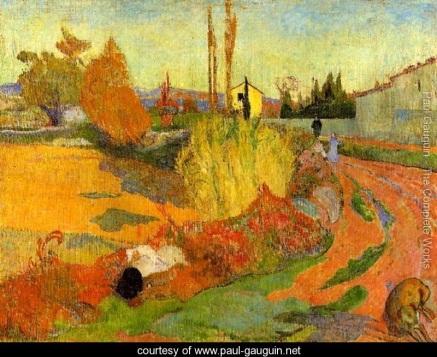
Figure 2 Paul Gauguin Landscape--Farmhouse-In-Arles-large
Figure 3 Marc Chagall Small Drawing Room. 1908
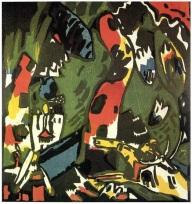
Figure 4 Wassily Kandinsky  Archer. 1909 year
Figure 5 Frans Hals two boys singing
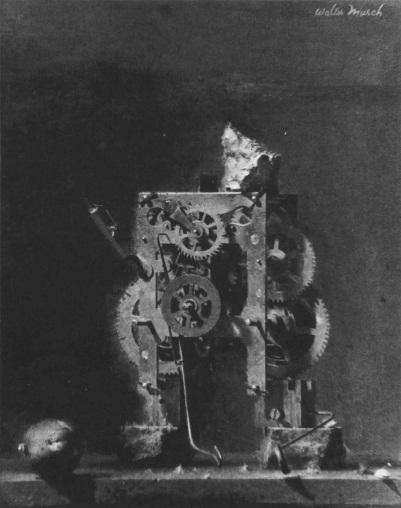
Figure 6 Walter Tandy Murch The Clock, 1950
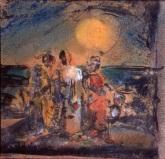
Figure 7 George Rouault Christ et disciples, 1905
Figure 8 Francisco De Goya  Charles-IV-And-His-Family-large
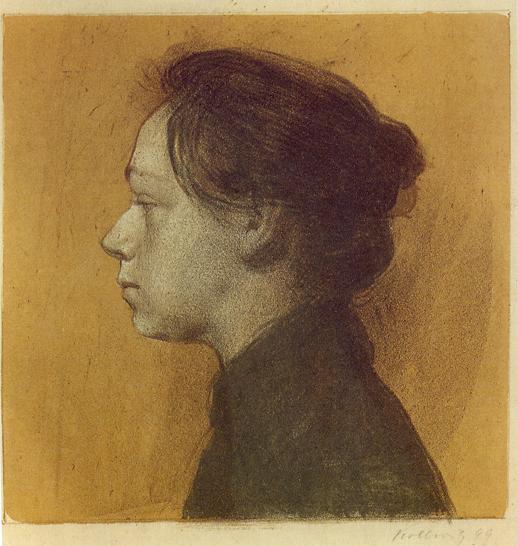
Figure 9 Kathe Kollwitz Self Portrait 1898
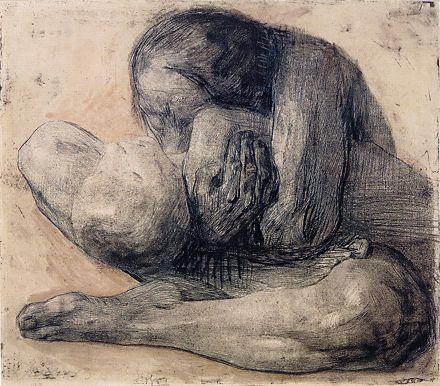
Figure 10 Kathe Kollwitz Woman with Dead Child 1903

Figure 1: Self-portrait as a painter, 1888

Figure 2: Landscape--Farmhouse-In-Arles-large

Figure 3: Small Drawing Room. 1908

Figure 4: Archer. 1909 year

Figure 5: two boys singing

Figure 6: The Clock, 1950

Figure 7: Christ et disciples, 1905
Figure 8: Charles-IV-And-His-Family-large
Figure 9: Self Portrait 1898
Figure 10: Woman with Dead Child 1903

Wednesday, August 28, 2013

PERSONAL MANIFESTO

The Founding and Manifesto of Motion
The personal manifesto of Ditiro Shayi

This manifesto has been created to represent the ideals of progress, continuity, flow and prosperity.
I believe that motion is an idea that is characterised by an active state. For an entity or human to prosper and attain success, they have to be in an active state of being.
I appreciate things that move as they instigate a sense of purpose in their existence; water that flows in a river is more dynamic than that found in a still lake. Flowing water represents that which is fresh and does so with energy whilst water in a lake is stagnant and consists of materials that are stationary and representative of decay.

The idea of motion also indicates a sense ‘life’ and an individual who is considered as living is one seen most active in society. A person who doesn’t wait for things to happen but goes out into the world and carries out tasks and actions is more likely to prosper and achieve set goals. If society adopts the idea of constant motion then many people would be independent, this would also mean that their way of thinking won’t be confined to one thing but they'll be able to switch and adapt to new things.

We should shun the act of waiting and start moving because movement promotes change. Bruce Lee said that ‘knowing is not enough; we must apply. Willing is not enough; we must do.’ The latter part of the quote, in order for it to be applicable, requires one to become active. People shouldn’t always be waiting to be given a helping hand, especially in a rapidly advancing world that is not willing show any mercy; instead they should try to engage with their surroundings.
When you move about the environment, you gain insight and turn to understand the locality better than before. The more times you repeat this, the easier it becomes to interact with that environment and also builds your character.

This type of activity carries on in the visuals we interact with and the inclusion of motion further enhances the experience and relation humans assign to those visuals. Even static posters, when incorporating the lines of force, they activate the senses of the viewer more efficiently. Objects that are on the move carry with them an aura of fascination with them. A star shooting across the firmament becomes more intriguing than its stationary peers. A sidewinder snake when motionless would look regular to most snakes but if had to move, the manner in which it does so becomes appealing and distinctive of its character. So movement not only makes you distinguishable but it allows for an individual to break away from the stagnant norms adopted by society.

If man had chosen not ‘do’, man would still be primitive stuck in their ways and thinking. The world owes a lot to the beauty of motion. The essence of life on earth relies upon motion and if the planet had to cease its rotation, death would be imminent.

Conclusion pending…


Saturday, August 10, 2013

World War 1


Factors Contributing to World War I

Prior to the assassination of Franz Ferdinand, numerous factors escalated the tension between European countries. Imperialism, Militarism, Nationalism and the forming of alliances set the tone for the war. This essay will take a closer look at each of the aforementioned factor and their actual impact at the start of the world war.

The Empires that existed before the war were comprised of various ethnic groups and some of these groups sought to break away from the ruling nations. Those that shared a culture and spoke the same language strived for independence. Nationalism meant that groups were loyal to their affiliated nation and it enabled other nations to establish themselves as powerful contenders.

Imperialism also became a factor when nations wanted to expand their empires. The continents of Africa and Asia were some of the places that were being colonized as they provided natural resources and offered new markets for trade. European countries were aware of this competed for the last available nations to colonize thus resulting in conflict.
The fight for the colonies meant that countries had to have a strong military and when a rival nation expanded its military, so did the other. Great Britain and Germany were at loggerheads to have the strongest navy and they engaged in an arms race. The technological advancements from the Industrial Revolution let to new types of weaponry to be created.
 
Countries sought further strengthening by forming alliances, which made the tension more volatile. The Triple Alliance and The triple Entente were formed from the European nations. The Triple Entente comprised of Russia, France and Great Britain with the Triple Alliance being formed by Italy, Austria-Hungary and Germany. The alliances were such that there was a balance of power and also that if the enemy attacked a country; the ally would come to the aid of the attacked.
Ongoing tensions between nations around the Balkans let to the assassination of Archduke Franz Ferdinand, who was the heir to the Austria-Hungary throne. With the assassinator being a Serb nationalist, war was declared on the nation of Serbia by Austria-Hungary following an ultimatum. From 1914 Jul 28th, other nations gradually joined the war mainly on the grounds of the alliance system that was formed.
 
Even though the assassination of Franz Ferdinand is seen as the spark for the First World War, factors like militarism, imperialism, nationalism and formation of alliances were the actual building blocks. These factors had gradually created an unstable atmosphere between the Europeans superpowers and the allies and a single event was needed to cause the chain reaction.

Monday, July 29, 2013

MODERNISM


How the World Became Modern

Before the 1600s people had been content with a lifestyle of living off the land and accepting things as they are. As time passed on peoples beliefs and perception on how the world works gradually changed. People began to question known ideals and norms; they looked for reasons to why things are the way they are. The modern world has its foundation in the Age of Enlightenment; from this era emerged new types of thinking that led to the modern world. Various movements continued the impact.

The Age of Enlightenment laid the groundwork for the modern world as people of that time changed their mindset from one of a superstitious nature to one of applying reason. Because people were driven to think, their growth of knowledge became rapid and advancements were made with new innovations taking form. This new type of thinking let to a demand for a better standard of living and philosophers like Jean Jacques Rousseau forged ideas of equal rights for all.  The knowledge attained let to new technologies.

In England factory systems were being built in large numbers and around Europe, machines began to replace man and animals by doing most of the work. The Industrial Revolution was starting. These factories caused rapid urbanization and people earned a better living working in the city than at the farms. Despite the long working hours, poor living conditions and low wages, a larger percentage of people still moved to the city. Home businesses adopted the factory system to produce their goods, utilizing machinery to assist. Private businesses had total control what they wanted to sell and also had the liberty to set their desired prices. The level of control and choice over the business let to capitalism. Travel also played a major role to these businesses and other sectors.

The invention of the steam engine helped the development of transportation. Large quantities of goods could be transported from place to place in a more easier and efficient manner. The building of railroads also meant that trade became a lot easier. Technologies such as the train, steamboat and motorcar allowed for people to travel further to new places. This was pivotal in the cross-pollination of ideas and information from various locations. The impact of travel could be seen through the Great Exhibition of 1851; the brainchild of Prince Albert, where different types of innovations, designs and artifacts of interest were horded under one roof. The Crystal Palace Exhibition exposed people to new worlds and cultures.

Amidst the rise of the modern world, various movements reacted both negatively and negatively to these changing times. The Design Reform movements were against the change, mainly the Industrial Revolution and they had embraced socialist ideals. They sought for inspiration from the past, believed in craftsmanship and worked in the form of guilds. Architect, carpenter, and painter…they saw each other as equals and with this forged toward a utopian ideal. Their cause was flawed by the high cost of their products.
The Futurism movement however championed the modern world; they wanted ideas of speed and dynamism to represent them. Led by Tomasso Marinetti, the Futurist was radical in their approaches and themes of motion, time and technology. This movement not only accepted modernity, they changed peoples views about it.

The modern world came about from mans desire to know more and understand the world. From being enlightened, people started applying their found knowledge with innovations and inventions of news technologies. With the rapid changes, various movements had their own views on how the world should move forward.

Wednesday, July 24, 2013

METROPOLIS: Style & Themes


Metropolis is a classic movie that has accumulated large amounts of praise and a cult following even today. The following essay will identify and discuss the themes and styles used in the movie. The mentioned points attribute to the movies success.

THEMES

Class division
The movie makes use of a number of themes to project its message across, one of which is class division. There is a division formed between the working people and the rich ones. The workers, who keep the machines in operation, have nothing to show for their hard labor. They all have the same clothing and their houses seem barren and dull.
It forms a great contrast when compared to the rich people of Metropolis who endlessly indulge in the nice things the city has to offer. While the workers toil in harsh conditions, the rich folk get carried away with the eccentric life and they are nicely dressed for the constant parties and entertainment that take place in the city. The aristocratic lifestyle they have adopted comes at the expense the workers who tend the machines every time.


The workers are divided from the rich people. The workers keep the machines in operation in harsh conditions while the rich people get carried away in the eccentric life by partying all the time. They are enjoying the fruits of the workers labor.

Urbanization


The city of Metropolis shows a lot of technological advancements. This can be seen in the city's architecture and the forms of transportation. There is a constant production from the machines to invent new technologies. 

Industrialization
This theme can be seen in the machines that are kept running by the workers. These machines keep going and those that are rich feed on the results.

Capitalism
Dehumanization

STYLE

German Expressionism was the style put to use. The set of Metropolis used abstract and disproportionate dimensions. The style is defined by a distinctive, heavily stylized, artificial aesthetic.

Expressionism- characteristically uses distortion and exaggeration, also non-realistic visuals, to emphasize the inner emotions.